
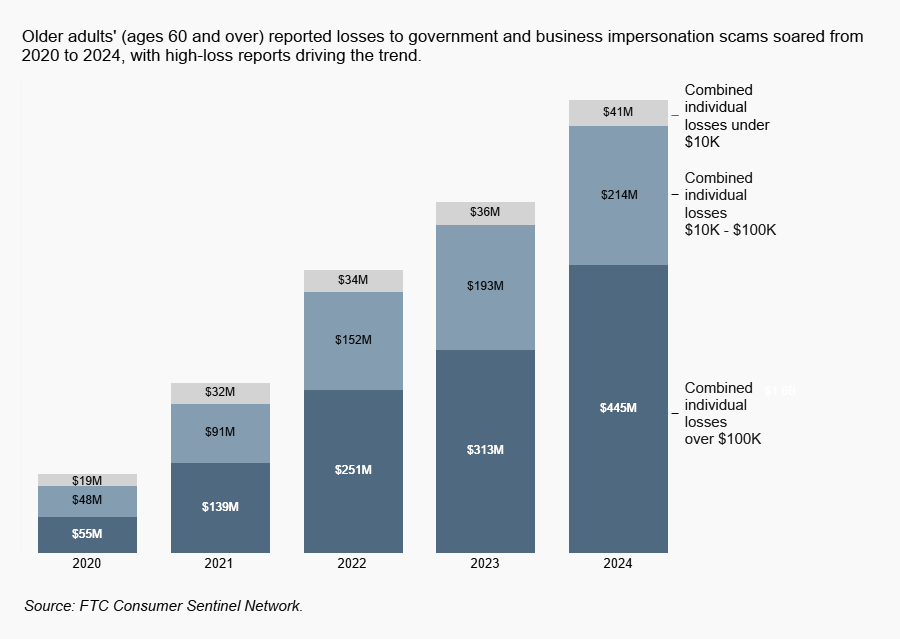
National "Slam the Scam" Day 2026 is Thursday, March 5, designated by the Social Security Administration's Office of the Inspector General to raise awareness of government imposter scams. Imposter scams are an increasingly common form of financial abuse that leaves victims emotionally and financially devastated. These scams exploit trust and prey on emotions by inciting a sense of fear or danger, disproportionately targeting older adults who are seeking connection or support. While these scams have impacted victims of all ages, the FTC reports that in 2024, older adults were far more likely to experience major financial losses. Losses of $10,000 or more were more than twice as likely to be reported by older adults, and losses over $100,000 were three times as likely to be reported by this age group.
The AARP‑produced Fraud Wars docuseries shines a light on how modern scams work, who is behind them, and the steps you can take to protect yourself and your loved ones. Its first episode, “'FBI Agent’ Stole My $600K… Then Vanished,” is dedicated to these government imposter scams.
Government imposter scams, also known as phantom hacker scams, often start with a phone call from someone claiming to be an FBI agent. Scammers frequently use the real names of federal agents and spoof caller ID to make the call look legitimate. They can sound highly convincing, providing details like badge numbers or case reference codes to build trust.
The scammer warns the victim that their bank account or Social Security number has been compromised, urging them to immediately transfer their money to a so-called “safe account” for protection—an account which is actually controlled by the fraudster. To keep the victim from alerting anyone, the caller may claim the local bank branch is under investigation and instruct them not to tell bank staff the real reason for their withdrawal.
The phantom hacker scam is a targeted government imposter scam, carried out in several phases. According to an FBI Public Service Announcement, each phase is led by a different scammer pretending to be someone they aren’t, such as tech support, a bank representative, or a federal agent. Each imposter role is carefully designed to make the scam seem more credible, building trust as the scheme progresses.
The scam starts when you receive a call, text, email, or computer popup, urging you to contact tech support. After reaching out, a fake customer service representative claims your money is at risk and instructs you to download a remote access program. Once you grant access, the scammer pretends to scan your computer and warns you that your bank accounts are vulnerable, asking you to open your financial accounts so they can "help." In reality, they're targeting your assets and setting you up for the next phase.
Next, a second scammer contacts you posing as someone from your bank or financial institution. Their goal is to reinforce the danger and gain your trust. They claim that foreign hackers have compromised your accounts and urge you to transfer your money to a "safe" account with the Federal Reserve or another government agency. They may instruct you to use wire transfers, cash, or cryptocurrency and maintain secrecy about the reason for the transactions.
In the final phase, a third scammer impersonates an official from a U.S. government agency, emphasizing the urgency and danger to your funds. If you become suspicious, they provide fake official communications, such as emails or letters on convincing-looking government letterhead, to further persuade you to move your money and complete the scam.
Our Fraud Investigations Manager, Ana Gutierrez, shares a real example of how government imposter scams have impacted clients:
The client received a phone call from someone claiming to be an FBI agent, warning her that criminals were actively targeting her bank accounts. The caller sounded authoritative and provided what appeared to be official credentials. He told her that, to protect her money, she needed to immediately withdraw a significant sum of cash from her local bank branch and send it to a secure address for “safekeeping.” He emphasized that she must not tell anyone at the bank the real reason for the withdrawal, insisting that the case was confidential and under active investigation.
Feeling anxious but wanting to cooperate with law enforcement, she followed the instructions. The “agent” gave her a FedEx address and explained exactly how to package and ship the cash. He called repeatedly to reassure her, answer questions, and remind her of the urgency and secrecy of the situation. Despite her concerns, she trusted the caller because of his knowledge about her personal situation, and he referenced information only an official might know.
Just before sending the cash, she decided to call her daughter about the exchange because something felt off. It was only after discussing the situation with her family that she realized she had fallen victim to a government imposter scam. The emotional toll was significant, as she had acted out of fear and trust in authority, but unlike other victims, her money was still safe.
This scenario is a common example of a government imposter scam, where fraudsters rely on intimidation, urgency, and a convincing story to manipulate victims into sending funds under false pretenses.
Our team is committed to protecting clients from scams and helping you stay informed. To protect yourself or a loved one, keep these important reminders in mind:
At American Riviera Bank, your financial well-being – and that of your loved ones – matters to us. If you are unsure about a transaction or feel pressured to move funds quickly, we encourage you to reach out to a member of the bank’s management team before taking any action.
If someone you care about has been victimized, you can help by sharing educational resources and encouraging them to seek support. Groups like the AARP Fraud Victim Support Group offer a safe space to process feelings of loss, embarrassment, and isolation. Reporting fraud is also an important step, even if no money is lost. You never know how one piece of information may help law enforcement with an ongoing case.
If you or a loved one suspects fraud, report it to your local police or Adult Protective Services (APS), and consider submitting a report to one or more of the following federal agencies and databases:
Imposter scams are a serious and increasingly common form of financial fraud. Staying informed, asking questions, and speaking up when something doesn’t feel right can help protect you and those you care about from financial harm. At American Riviera Bank is here to help you stay protected and supported.
Previous: MDPA Homeownership Program 2026 Next: Ready for Homeownership?